
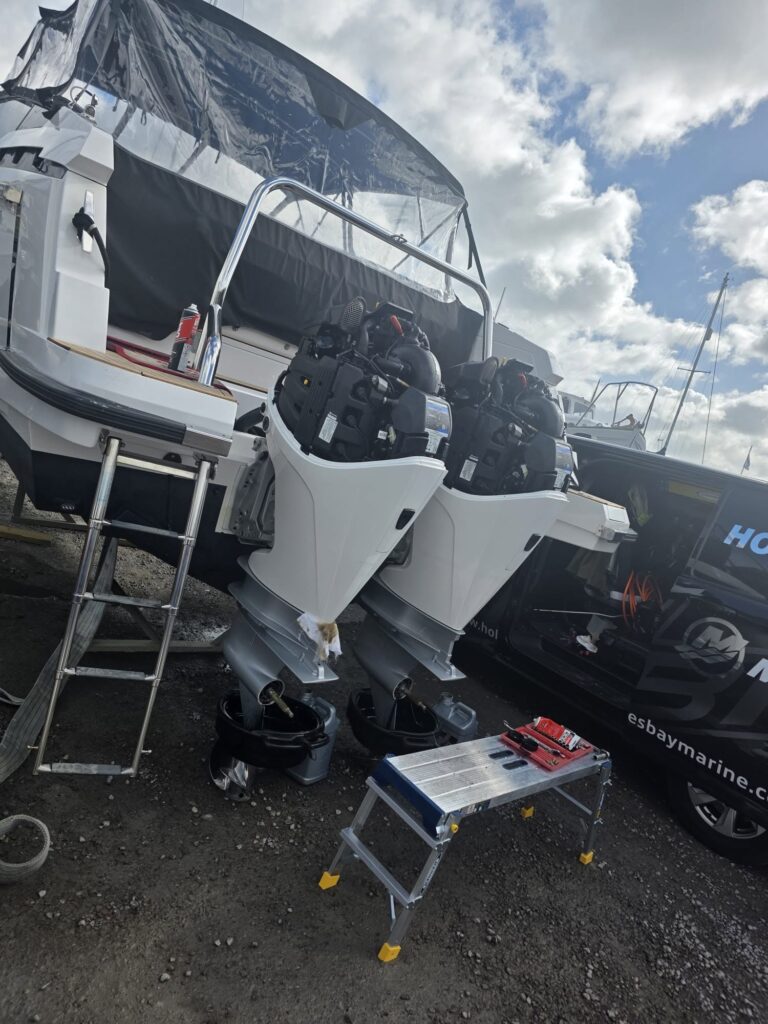
Choosing the right marine engine is one of the most important decisions for any boat owner. Your engine affects performance, fuel use, maintenance needs, handling, reliability and the overall experience you have on the water.
Whether you are buying a boat, upgrading your current engine or simply trying to understand how your vessel works, knowing the main marine engine types can help you make better decisions. From inboard and outboard engines to two-stroke and four-stroke options, each engine type has its own advantages depending on the size of your boat, how you use it and the level of maintenance required.
At Holes Bay Marine, we support boat owners in Poole and across the South Coast with professional marine engineering, servicing, repairs and maintenance. This guide explains the key engine types and what boat owners should consider before choosing the right setup.
Overview of Marine Engine Types
Marine engines are designed to power boats safely and efficiently in demanding water conditions. Unlike standard vehicle engines, marine engines must cope with moisture, salt water exposure, vibration, cooling demands and long periods of varied use.
The most common marine engine types include inboard engines, outboard engines, sterndrive engines, two-stroke engines and four-stroke engines. Each type is suited to different vessels and boating needs.
For example, smaller leisure boats often use outboard engines because they are easy to access and maintain. Larger boats may use inboard engines because they provide strong, balanced power and are usually better suited to heavier vessels. Some boats also use sterndrive systems, which combine features of both inboard and outboard setups.
Understanding these options can help you choose an engine that matches your boat’s size, weight, usage and performance requirements. If you are unsure what is best for your vessel, professional advice from a local marine engineering company in Poole can help you make the right choice.
Inboard vs. Outboard Engines
One of the biggest differences between marine engine types is whether the engine is fitted inside the boat or attached externally.
What Is an Inboard Engine?
An inboard engine is installed inside the hull of the boat. It usually powers a shaft and propeller system beneath the vessel. Inboard engines are commonly found on larger boats, cruisers, commercial vessels and boats that require stable, consistent power.
One of the main advantages of an inboard engine is weight distribution. Because the engine sits inside the boat, it can help improve balance and handling, especially on larger vessels. Inboards are also often chosen for boats that need reliable long-distance performance.
However, inboard engines can be more complex to access depending on the boat design. Servicing and repairs may require specialist marine engineering support, especially when working around internal engine compartments and connected systems.
What Is an Outboard Engine?
An outboard engine is mounted on the outside of the boat, usually at the stern. It combines the engine, gearbox and propeller into one external unit. Outboards are popular on smaller boats, fishing boats, ribs and leisure craft because they are compact, versatile and easier to access.
Outboard engines are often easier to remove, inspect and maintain compared with inboard engines. They also free up space inside the boat, which can be useful for smaller vessels.
The right choice between inboard and outboard engines depends on your boat type, how often you use it, where you use it and what level of performance you need. Boat owners can also explore manufacturer information from trusted brands such as Mercury Marine when comparing outboard options.
Which Is Better?
There is no single answer. Inboard engines can be ideal for larger boats that need strong, steady power. Outboard engines can be better for smaller vessels where easy access, flexibility and simple maintenance are important.
If you are choosing between the two, consider your boat size, storage space, typical journey length, fuel use, maintenance access and budget. A professional marine engineer can inspect your vessel and advise which engine type is most suitable.
Two-Stroke vs. Four-Stroke Engines
Another important comparison is between two-stroke and four-stroke marine engines. These terms refer to how the engine completes its power cycle.
Two-Stroke Engines
A two-stroke engine completes its power cycle in two piston movements. Traditionally, two-stroke engines were popular because they were lightweight, simple and powerful for their size. This made them common on smaller boats and older outboard setups.
Two-stroke engines can offer strong acceleration and a simple mechanical design. However, older two-stroke models can be noisier, less fuel efficient and may produce more emissions compared with modern four-stroke engines.
Some modern two-stroke systems are more advanced than older versions, but many leisure boat owners now choose four-stroke engines for everyday reliability, economy and smoother running.
Four-Stroke Engines
A four-stroke engine completes its power cycle in four piston movements. These engines are widely used in modern marine applications because they are generally smoother, quieter and more fuel efficient.
Four-stroke engines are often preferred by boat owners who want reliable performance, better fuel economy and reduced noise. They are commonly used across a wide range of modern outboard and inboard marine engines.
Four-stroke engines may have more moving parts than traditional two-stroke models, which means regular servicing is important. Oil changes, filter replacements, cooling system checks and general inspections all help keep the engine performing properly.
Maintenance Differences
Both two-stroke and four-stroke engines need proper care, but maintenance requirements can differ. Two-stroke engines may require attention to oil mixing or injection systems, while four-stroke engines need regular oil and filter servicing.
Whatever engine type you have, following a proper maintenance schedule is essential. The Royal Yachting Association recommends basic engine checks such as inspecting fuel, oil, belts, hoses, leaks and cooling water flow to help support safer boating.
Choosing the Right Engine for Your Boat
The best marine engine for your boat depends on several factors. There is no one-size-fits-all answer, which is why it is important to choose an engine that suits your vessel and how you use it.
Consider Your Boat Size and Weight
Your engine needs to be powerful enough to move your boat safely and efficiently. An engine that is too small may struggle, especially when carrying passengers, equipment or fuel. An engine that is too powerful may be unnecessary, less efficient or unsuitable for the boat’s design.
Matching engine power to boat size is essential for performance, safety and long-term reliability.
Think About How You Use Your Boat
A boat used for short leisure trips around Poole Harbour may need a different engine setup from a vessel used for longer coastal journeys. Fishing boats, ribs, cruisers and commercial vessels all have different performance needs.
Before choosing an engine, think about your usual journey length, water conditions, passenger numbers, storage needs and how often the boat is used.
Factor in Maintenance and Servicing
Every marine engine needs maintenance. When choosing an engine, consider how easy it will be to service, how accessible the parts are and whether you have local support available.
Regular marine engine servicing in Poole can help prevent problems, improve performance and extend the life of your engine. Professional servicing is especially important before busy boating seasons or after long periods of reduced use.
Get Professional Advice
If you are unsure which engine type is right for your boat, it is always best to speak to an experienced marine engineer. A professional can assess your vessel, listen to how you use it and recommend the most suitable engine type or maintenance approach.
At Holes Bay Marine, our team provides marine engineering support for boat owners across Poole, Dorset and the South Coast. From engine servicing and repairs to diagnostics, maintenance, electrics and winterisation, we help keep boats safe, reliable and ready for the water.
Need Help With Your Marine Engine?
Understanding marine engine types can help you make better decisions, but you do not have to work it out alone. Whether you need advice, servicing, diagnostics or repairs, Holes Bay Marine is here to help.
If your boat engine needs attention, or you are unsure which engine type is best for your vessel, contact Holes Bay Marine today for professional marine engineering support in Poole.
Speak to a Marine Engineer in Poole
Need help choosing, servicing or repairing your boat engine? Holes Bay Marine provides trusted marine engineering support for boat owners across Poole and the South Coast.